Ibn Arabi · Chapter 2 of 10
One Light, Many Windows
وَحْدَةُ الْوُجُودِ
One light. You can feel far from it, never cut off.
Chapter 2 of 10Oneness of being
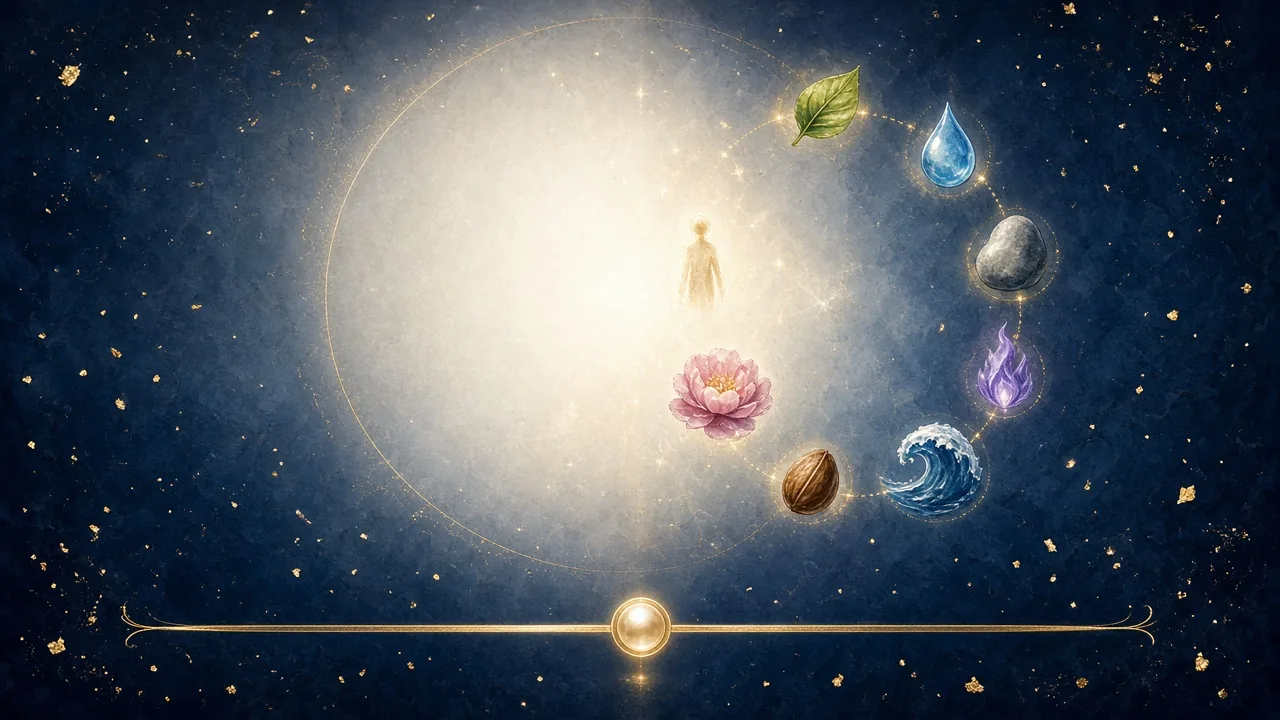
One light, many panes
There’s only one true existence, and everything we see is that one light shining through different colored glass.
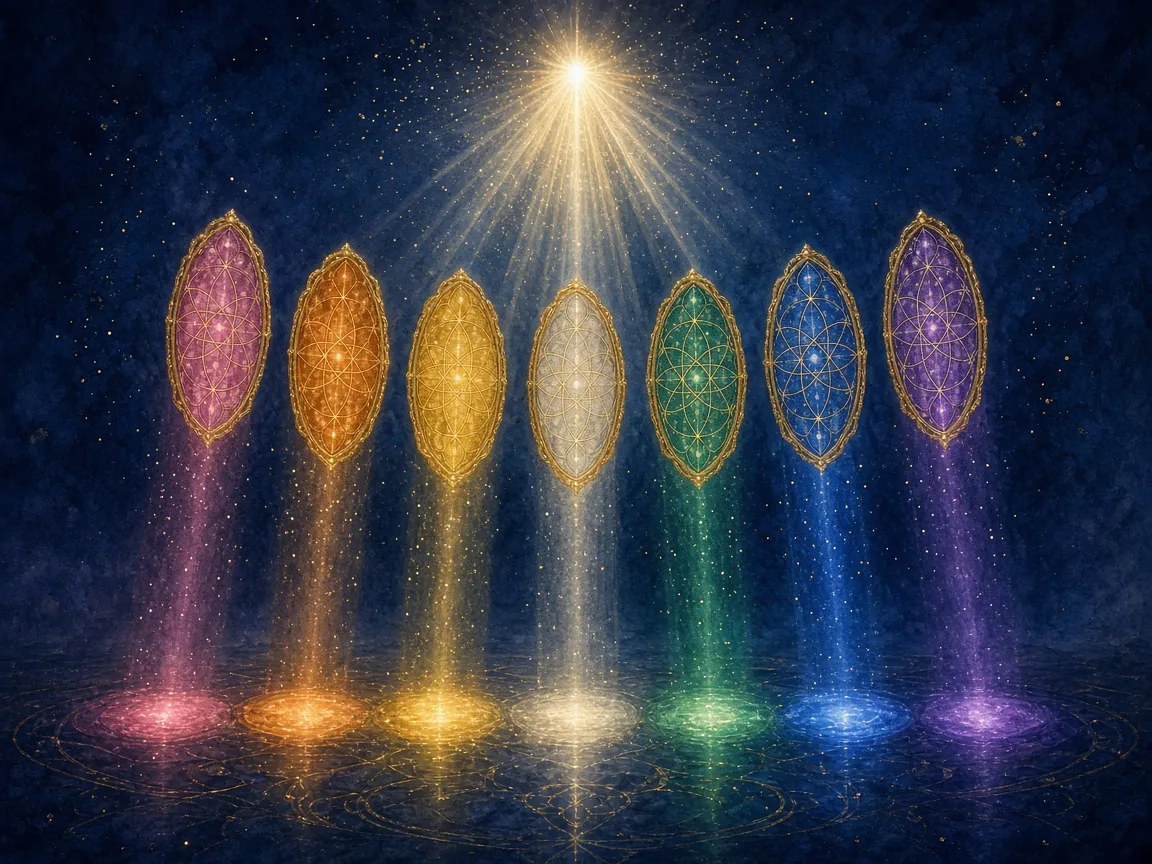
Tap a pane. Then take the glass away.
Why it’s interesting
You and a tree and a star aren’t separate “existers”. You’re different colors of the same light.
The hard part
It can sound like “everything is the higher power”, which isn’t what he means.
Common misconception
That he believed the world is the divine itself (pantheism). The glass is not the light. Things only borrow existence.
Why it matters
This is the idea he’s most famous for, and the rest of the course builds on it.
From the Scholar’s notes4 passages · Arabic, with where to find it
He shows things and is their very being
فسبحان من أظهر الأشياء وهو عينها
Fut. II.459 (ch. 198)His own words
Light takes the glass's color
إن النور أخضر لخضرة الزجاج … فهذا نور ممتد عن ظل وهو عين الزجاج
Fus. 104 (Yūsuf, حكمة نورية, before Hūd at p. 106)His own words
Many in fixity, one in being
فاثبت الكثرة في الثبوت وانفها من الوجود واثبت الوحدة في الوجود وانفها من الثبوت
Fut. II.502 (end of ch. 213, on ghayra; just before ch. 214)His own words
The term waḥdat al-wujūd
وحدة الوجود
not his term; al-Qūnawī, al-Farghānī; made a label by Ibn Taymiyya's polemicA later reading
Each line is a short gloss of the passage, not a translation. “His own words” means the Arabic is from Ibn Arabi’s own text at that place.
He, not He
The higher power is both beyond everything (“not He”) and showing up in everything (“He”), and you need both views at once.
Slide between He and not He.
Why it’s interesting
Most traditions pick one side, and he insists on holding both.
The hard part
It feels like a contradiction, which is the point.
Common misconception
That he only taught the “in everything” side. He warned that either side alone is half blind.
Why it matters
This balance is what keeps his teaching from tipping into extremes.
From the Scholar’s notes5 passages · Arabic, with where to find it
He / not he
لذلك نقول فيه هو لا هو، أنت لا أنت
Fus. 76 (Idrīs)His own words
Hold both: beyond and within
فإن قلت بالتنزيه كنت مقيدا وإن قلت بالتشبيه كنت محددا وإن قلت بالأمرين كنت مسددا
Fus. 70 (Nūḥ)His own words (verse)
Q 42:11 read as both at once
ليس كمثله شيء فنزه وهو السميع البصير
Fus. 70His own words
Chapter on the men of bewilderment
الباب الخمسون في معرفة رجال الحيرة والعجز
Fut. I.270 (ch. 50)His own words
Bewilderment as the highest station
لأنه المقام الأعلى
Fut. II.661 (ch. 292); cf. II.531, II.545 (ch. 246)His own words
Each line is a short gloss of the passage, not a translation. “His own words” means the Arabic is from Ibn Arabi’s own text at that place.
A closer look, in this chapter
One light, many windows
Tap a window, or the light. Then take the glass away.
- The big idea
- There is one being, the Real’s, and every thing is a window it shines through in a color of its own.
- What’s hard to get
- The colors are real, but they belong to the glass, not to the light.
- Common misconception
- That oneness makes everything the same. Every window stays itself, garnet or sapphire to the end.
- Why it matters
- When someone grates on you, something softens when you see the same light behind a different pane.
The one idea
Sunlight falls through a row of stained-glass windows: garnet here, sapphire there, a pool of gold at the end of the aisle. The colors are real, and each belongs to its glass. The light is one.
That is the heart of وحدة الوجود waḥdat al-wujūd, the oneness of being. There is one wujūd, one being, and it belongs to the Real. A stone, a tree, your mother, you: each one is a window it shines through. Your color is yours. The light is not.
And this is what it means on a hard day: you can feel far away, but you cannot be cut off. A window that holds any light at all is lit from the source. Cut off, it would not be there to feel the dark.
Far and near
The Real is beyond everything, and also close in everything. Slide between the two, or rest in the middle.
- The big idea
- The Real is beyond everything (tanzīh) and near in everything (tashbīh), and he wants both at once.
- What’s hard to get
- You must hold the two together. He calls each thing huwa lā huwa: He, and not He.
- Common misconception
- That one side must be right and the other wrong.
- Why it matters
- Holding two true things at once, “this is hard” and “I am held,” can steady a rough day like a keel.
Noah
In the Fuṣūṣ, Ibn Arabi lingers over Noah. Noah told his people only that the Real is beyond everything, تنزيه tanzīh, beyond all likeness. The Qurʾān says they pressed their fingers into their ears and drew their cloaks over their heads.
What they heard, he says, was half a picture. The other half is تشبيه tashbīh, the Real close at hand, showing in the world they could see and touch. Had Noah offered both, they would have answered. Far and near belong together; either alone is half the sky.
لَيْسَ كَمِثْلِهِ شَيْءٌ وَهُوَ السَّمِيعُ البَصِيرُ
“Nothing is like Him, and He is the Hearing, the Seeing.”
Qurʾān 42:11. He reads its first half as far, its second as near · in plain words
Lent light
Only the Real shines by itself. Everything else is lit. Tap to look at a thing on its own.
- The big idea
- Only the Real exists by itself. Everything else has its being on loan, moment by moment, like a wall lit by the sun.
- What’s hard to get
- Things are not unreal. They are lit.
- Common misconception
- That borrowed means worthless. A lit window is still a thing of beauty.
- Why it matters
- You do not have to build your worth from nothing today. It came with the light.
One water, many cups
One water, poured into five cups. Then pour it out.
- The big idea
- One water takes the color of each cup; one light shows differently in each thing.
- What’s hard to get
- The difference comes from the one who receives, its readiness (istiʿdād), not from the source.
- Common misconception
- That the water itself changes. It stays clear the whole time.
- Why it matters
- If a moment feels dark, it may be the cup you are holding, not the light.
Not this, not this, but this
Two pictures he turns down, and the one he keeps. Tap a panel.
- The big idea
- The Real is not shut inside things (ḥulūl), and things do not melt into the Real (ittiḥād). Windows stay windows.
- What’s hard to get
- One being does not mean that everything is the Real.
- Common misconception
- That oneness erases the line between you and the Real.
- Why it matters
- You can feel close to the Real and still be wholly yourself, limits and all.
Try it now
Think of someone who got under your skin this week. Hold their face in mind for ten seconds and say, silently: same light, different glass. You do not have to love the glass. Only notice whether your jaw unclenches anyway.
Go deeper
4 short sections. Open any one; each stands on its own.
1Shadows of one light1 min
Before the glass image, Ibn Arabi uses an older one: the shadow. The world, he says, is like a shadow cast by the Real. A shadow has no light of its own. Take the light away and there is no shadow at all: "shadows have no being when there is no light" (فإن الظلال لا يكون لها عين بعدم النور, Fus. 103, Yūsuf). And a shadow always returns to what cast it, as the Qur'an says, "then We draw it back to Us, a gentle drawing" (Q 25:46).
"In itself it has no color. But that is how you see it." (Fus. 103, Yūsuf)
Your darkest day is still a shadow. It is real as a shadow, and it is only there because light is.
2Both answers are true1 min
The stained glass on the main page comes from a passage about green glass. Ibn Arabi says that if you look at light through green glass and say "the light is green", you are right, and your eyes are your witness. If you say "light has no color", you are also right, and reason is your witness (Fus. 104, Yūsuf; paraphrase). Then he closes:
"This is light streaming from a shadow, and the shadow is the glass itself. It is a shadow made of light, because it is so clear." (Fus. 104, Yūsuf)
The clearer the glass, the more light comes through. You don't have to stop being glass. You can just get clearer.
3Only His face1 min
In a long passage about forms, Ibn Arabi says the Real is not something added on top of things: it is "the very self of every form", in minerals, plants, animals, stars and angels (Fut. II.459, ch. 198; paraphrase). Then he breaks into praise:
"Glory to the One who made things appear and is their very self. My eye has looked at nothing but His face, and my ear has heard nothing but His speech." (Fut. II.459, ch. 198)
Try it on the walk to the train. The noise of traffic, a stranger's face, rain on a window: not distractions from the Real, but where it is showing up today.
4The middle way, in verse1 min
The Noah story on the main page has a short poem behind it. Here are its first lines:
"If you say only 'beyond', you tie Him down. If you say only 'like', you fence Him in. If you say both, you hit the mark." (Fus. 70, Nūḥ)
And it ends: "You are not He. No: you are He, and you see Him in the very things, set free and held in place" (فما أنت هو: بل أنت هو, Fus. 70). Holding both is not indecision. It is what aim looks like here.
The phrase waḥdat al-wujūd, "the oneness of being", was given to his teaching by those who carried it after him; it became the name his whole school was known by.
Key words
If there is only one light, how does it show itself? Through its Names.
Next · Chapter 3: The Names →‹ Chapter 1: His life and works · Course homeSources
- Ibn ʿArabī, Fuṣūṣ al-ḥikam (the chapter of Noah); trans. R. W. J. Austin, The Bezels of Wisdom (1980), and Caner K. Dagli, The Ringstones of Wisdom (2004)
- Ibn ʿArabī, al-Futūḥāt al-Makkiyya
- William C. Chittick, The Sufi Path of Knowledge (1989)
- Toshihiko Izutsu, Sufism and Taoism (1983)
- Ibn ʿArabī, Fuṣūṣ al-ḥikam, ed. Afifi, Nūḥ (p. 70), Yūsuf (pp. 103–104)
- Ibn ʿArabī, al-Futūḥāt al-Makkiyya, ch. 198 (II.459)
- The Qur'an 24:35; 25:45–46
- William C. Chittick, The Sufi Path of Knowledge (1989)
- Toshihiko Izutsu, Sufism and Taoism (1983)