Ibn Arabi · Chapter 8 of 10
The Perfect Human
الْإِنْسَانُ الْكَامِلُ
A heart polished clear enough to show every Name.
The one idea
A human being, for Ibn Arabi, can be a clear mirror. Ādam, he says, was the polishing of the world’s mirror. He calls the one who is whole الإنسان الكامل al-insān al-kāmil, the perfect, or complete, human.
Complete does not mean flawless, and it does not mean better than anyone. It means whole: every quality gathered in one heart. That is why he says that whoever knows himself knows his Lord.
Chapter 8 of 10The Perfect Human
The polished mirror
A human heart is like a mirror. When it’s polished, it can reflect all the Names at once.
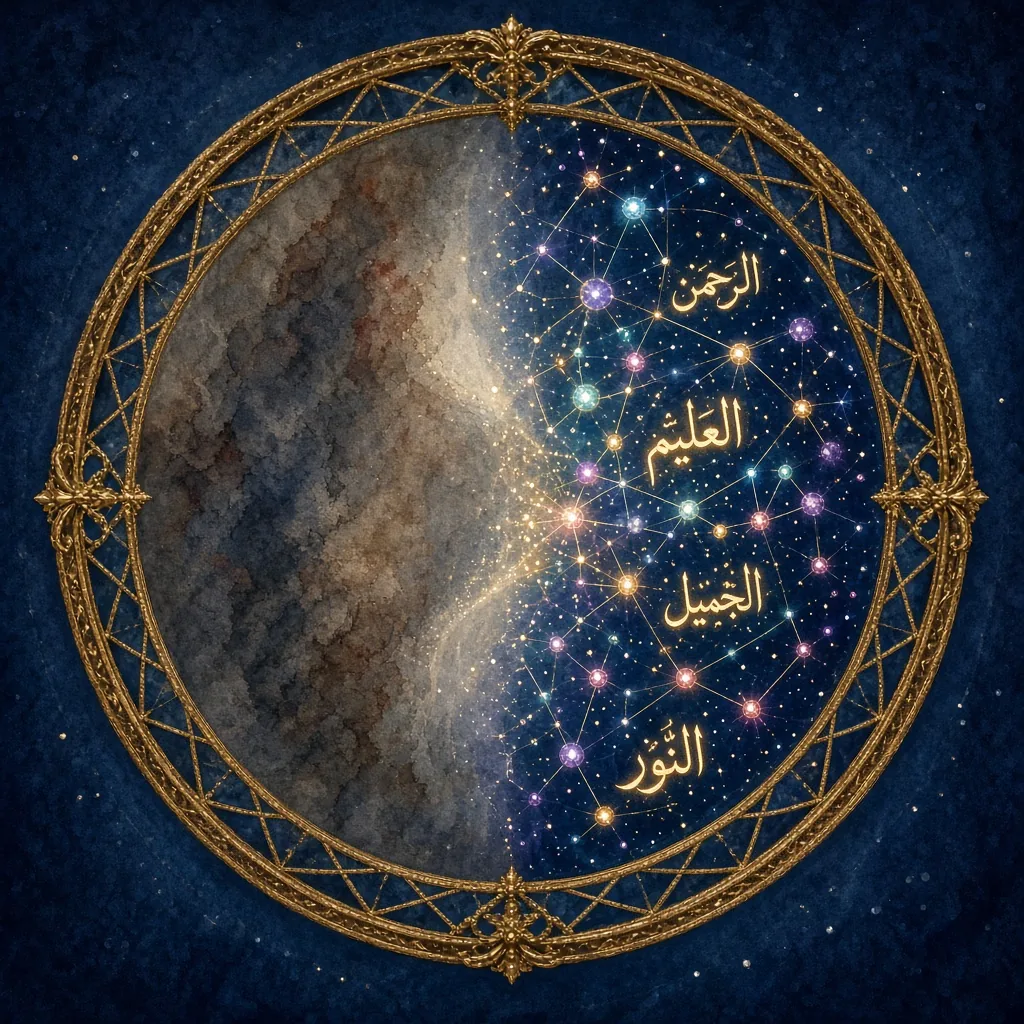
Rub the mirror clear.

Why it’s interesting
Humans are the only creatures that can hold every quality together.
The hard part
“perfect” sounds like flawless, but it means complete.

Common misconception
That it’s about being better than others.

Why it matters
It gives a reason for inner work, which is clearing the mirror.
From the Scholar’s notes3 passages · Arabic, with where to find it
Ādam as the polishing of the world's mirror and spirit of its form
فاقتضى الأمر جلاء مرآة العالم، فكان آدم عين جلاء تلك المرآة وروح تلك الصورة
Fus. 49 (Ādam)His own words
"Whoever knows himself knows his Lord"
من عرف نفسه عرف ربه
Fus. 69, 81, 122, 125, 215; Fut. I.63 and passim (78 hits)His own words use; not a sound hadith (attributed to Yaḥyā b. Muʿādh; Ibn Taymiyya, al-Nawawī reject; sources not opened) · not every detail confirmed
Two readings: you can't know, or you can
فإن شئت قلت بمنع المعرفة … وإن شئت قلت بثبوت المعرفة
Fus. 215His own words
Each line is a short gloss of the passage, not a translation. “His own words” means the Arabic is from Ibn Arabi’s own text at that place.
The pillar of the world
The complete human stands at the center of creation like a pillar holding it together.
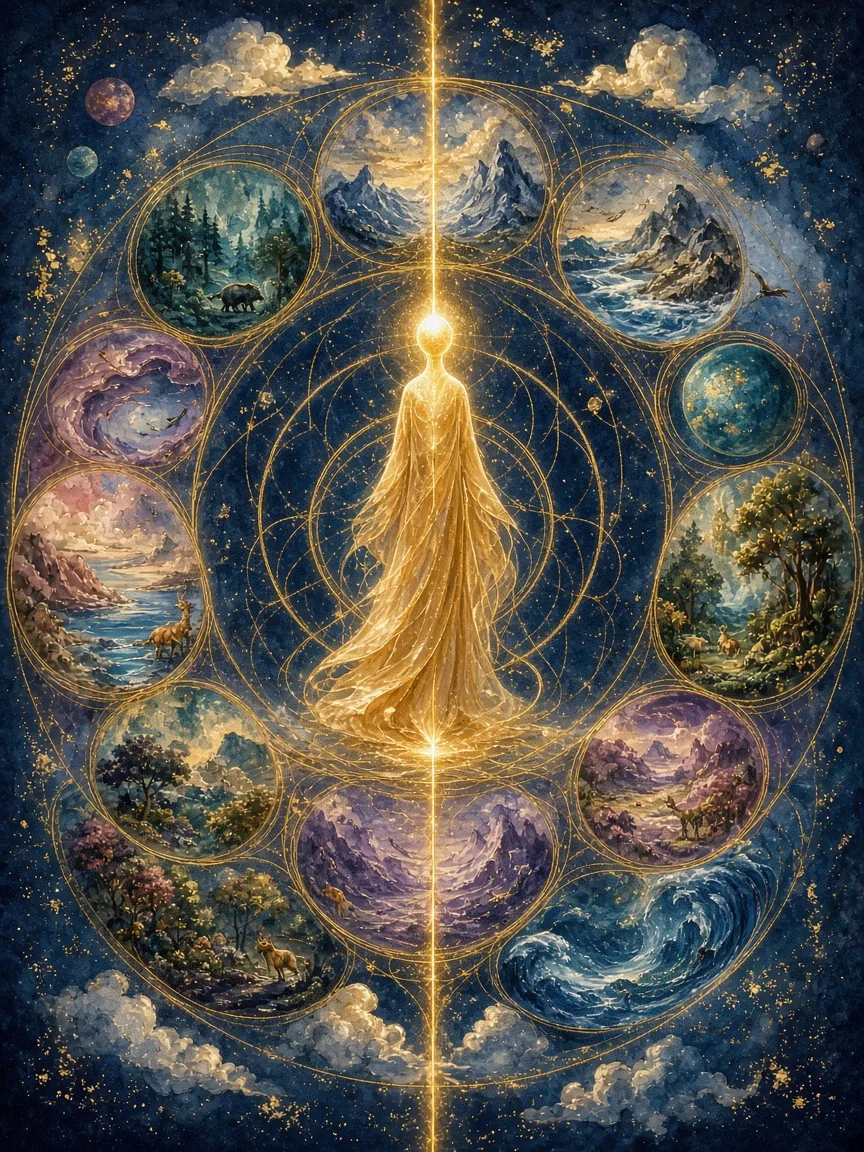
Tap the worlds. Then take the pillar away.

Why it’s interesting
It gives humans a huge role and a huge responsibility.
The hard part
It can sound like arrogance.
Common misconception
That only one special person can be this. Everyone carries the potential.
Why it matters
It’s the goal his whole path points toward.
From the Scholar’s notes3 passages · Arabic, with where to find it
The complete human, the most complete form
الإنسان الكامل أكمل نشأة ظهرت في الموجودات
Fut. I.163 (ch. 17)His own words
Most complete form for the realities of names and world
أكمل نشأة للحقائق التي أنشئ عليها حقائق الأسماء الإلهية وحقائق العالم … فهو بجمعيته حق كله
Fut. I.640His own words
Muḥammad the clearest pointer to his Lord
فكان عليه السلام أدل دليل على ربه
Fus. 214 (Muḥammad)His own words
Each line is a short gloss of the passage, not a translation. “His own words” means the Arabic is from Ibn Arabi’s own text at that place.
A closer look, in this chapter

The roots of the words
Arabic builds words from three-letter roots. Tap a root to turn it.
Twenty-seven prophets, each one a polished mirror for one wisdom.
Next · Chapter 9: The 27 wisdoms →‹ Chapter 7: Barzakh and imagination · Course homeSources
- Ibn ʿArabī, Fuṣūṣ al-ḥikam, ed. ʿAfīfī, p. 49 (Ādam), p. 69, p. 214 (Muḥammad), p. 215
- Ibn ʿArabī, al-Futūḥāt al-Makkiyya, I.163 (ch. 17), I.63, I.640
- Masataka Takeshita, Ibn ʿArabī's Theory of the Perfect Man (Tokyo 1987)
- Chittick, The Sufi Path of Knowledge (1989), ch. 1 "The Microcosm", "Human Perfection"; ch. 20 "Two Perfections"
- Chodkiewicz, Seal of the Saints