Ibn Arabi · Chapter 6 of 10
New Every Moment
الْخَلْقُ الْجَدِيدُ
This moment has never happened before.
Chapter 6 of 10New creation at every instant
Flicker frames
The world doesn’t just continue. It’s made fresh every moment, like movie frames moving too fast to notice.
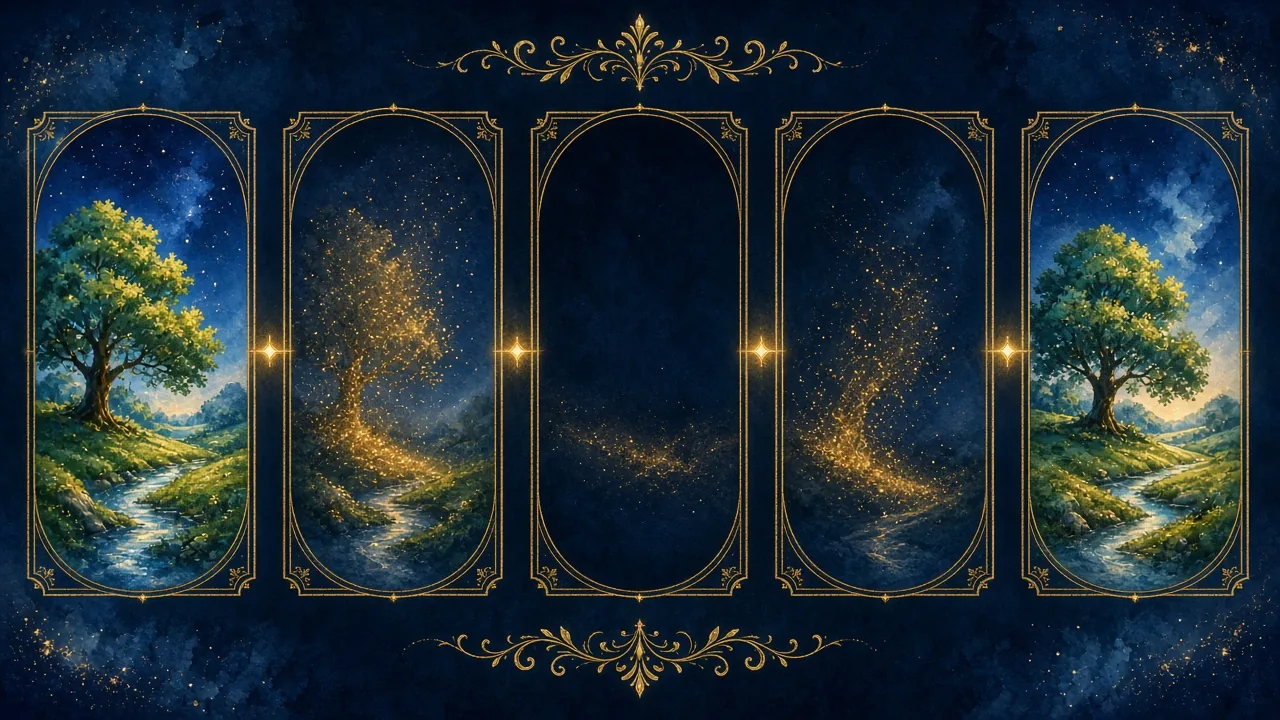
Slow it down, or step frame by frame.
Why it’s interesting
Nothing is ever the same twice, including you.
The hard part
It feels solid, so it’s hard to believe it’s constantly renewing.
Common misconception
That the world disappears in a scary way. It’s more like a nonstop gift.
Why it matters
It means real change is always possible.
From the Scholar’s notes3 passages · Arabic, with where to find it
Q 50:15, people unaware of renewal with the breaths
بل هم في لبس من خلق جديد. فلا يعرفون تجديد الأمر مع الأنفاس
Fus. 125 (Shuʿayb)His own words
Self-showing never repeats; each gives a new creation
يتجلى في كل نفس ولا يكرر التجلي … أن كل تجل يعطي خلقا جديدا
Fus. 126 (vs Ashʿarī accidents)His own words
In every breath a new making in us
في كل نفس له فينا إنشاء جديد بنشأة جديدة
Fut. II.46 (ch. 73)His own words
Each line is a short gloss of the passage, not a translation. “His own words” means the Arabic is from Ibn Arabi’s own text at that place.
The slow-motion dial
It slows time down so you can see each instant being made new.
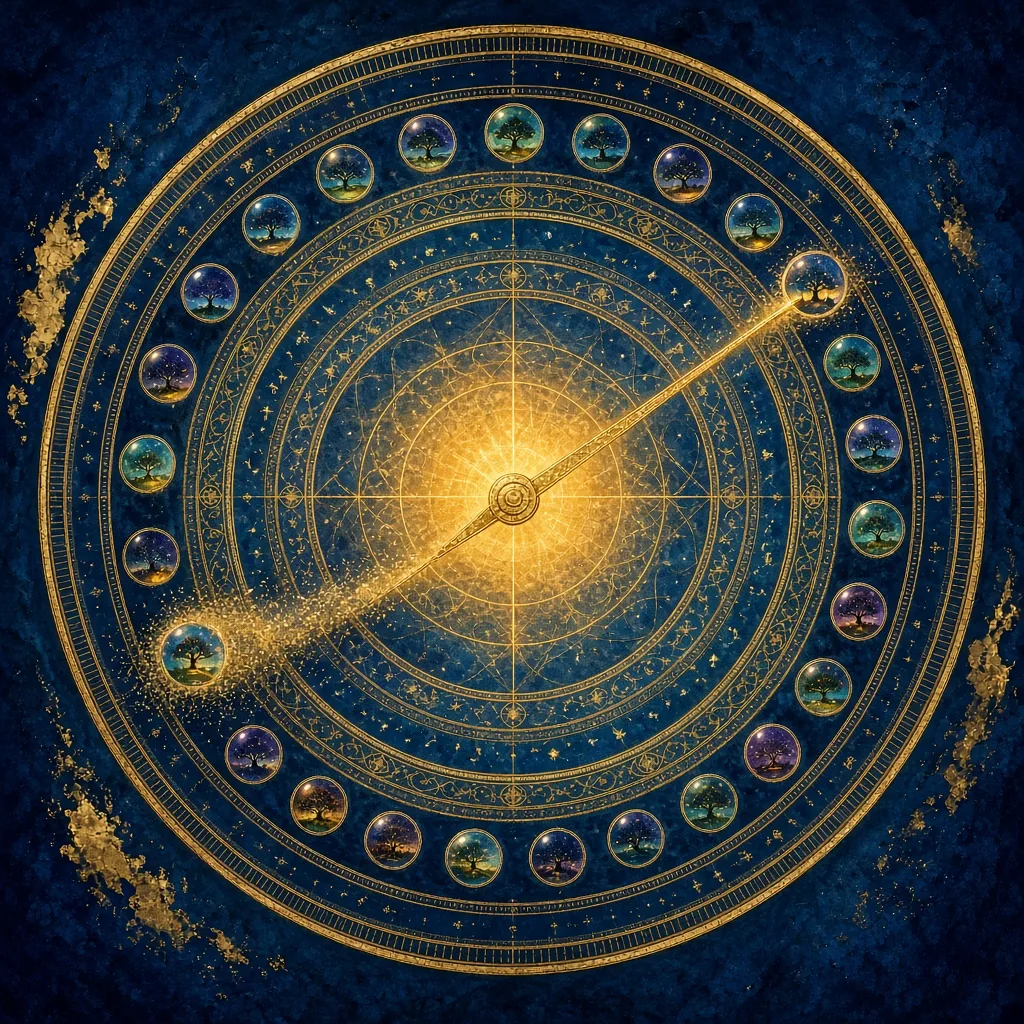
Drag the hand around the dial.
Why it’s interesting
It turns a huge idea into something you can almost feel.
The hard part
We never actually see the gaps.
Common misconception
That this is just like modern physics. It sounds similar, but it’s a spiritual idea, not a science claim.
Why it matters
For the heart, it means you aren’t stuck as who you were yesterday.
From the Scholar’s notes3 passages · Arabic, with where to find it
Bilqīs's throne: renewal of creation with the breaths
من تجديد الخلق مع الأنفاس
Fus. 155–156 (Sulaymān)His own words
Divine vastness means nothing repeats
فإن الاتساع الإلهي يعطي أن لا يتكرر شيء في الوجود وهو الذي عولت عليه الطائفة
Fut. I.266 (end of ch. 48)His own words
"Every day He is in a task" (Q 55:29) and the heart
كل يوم هو في شأن
Fut. II.113 (ch. 73)His own words
Each line is a short gloss of the passage, not a translation. “His own words” means the Arabic is from Ibn Arabi’s own text at that place.
Frame by frame
Only one frame is lit: this one.
- The big idea
- The world is made new each instant, so no state you are in is a life sentence.
- What’s hard to get
- It looks seamless. The newness is underneath, like the single frames of a film.
- Common misconception
- That your past no longer counts. It still shapes you; it is simply not happening now.
- Why it matters
- On a stuck day, the next moment is truly new. You can begin again inside it, not after it.
The one idea
Picture a flip book. Each page is its own small drawing. Riffle it fast and a figure walks; slow down and every page is new, a world drawn once and never again.
Ibn Arabi calls this الخلق الجديد al-khalq al-jadīd, the new creation. With every breath, the world is made again. The Real’s self-showing, تجلّي tajallī, never repeats. Two moments can wear the same face. They are never the same moment.
Here is the mercy in it. The self that was anxious, or stuck, or ashamed lives on an earlier page. Your history shapes the drawing; it does not freeze the hand. This page has never been drawn before.
فِي كُلِّ نَفَسٍ لَهُ فِينَا إِنْشَاءٌ جَدِيدٌ
“With every breath, He has a new making in us.”
Ibn Arabi, al-Futūḥāt al-Makkiyya, ch. 73 · in plain words
The throne that moved
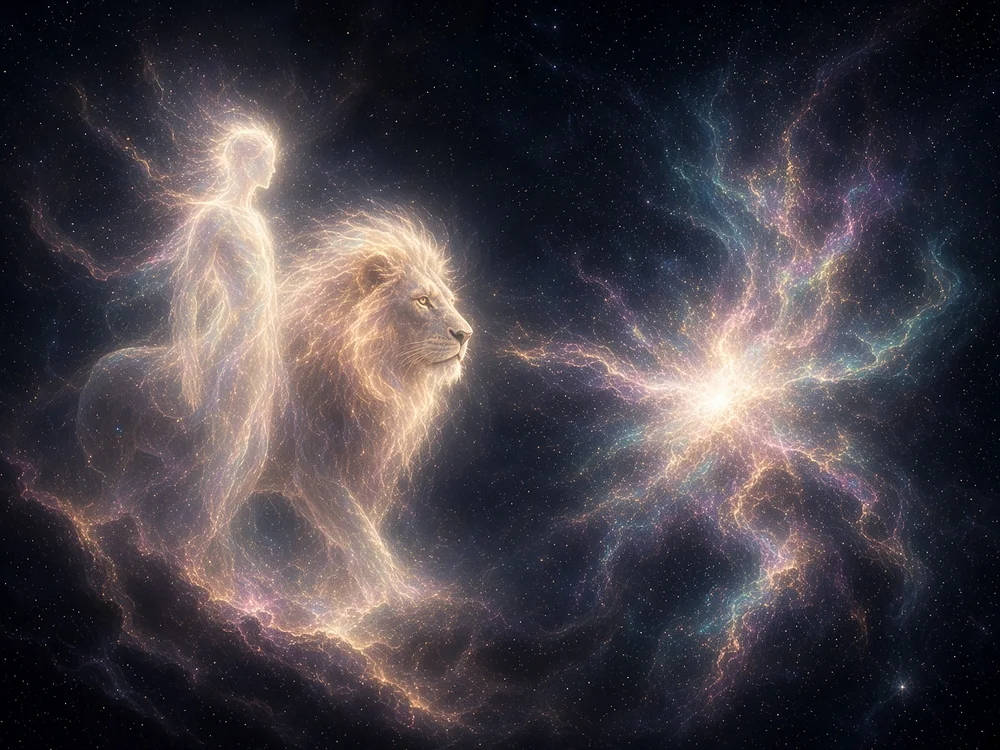
In the Qurʾān, Solomon asks for the Queen of Sheba’s throne, and it stands before him in the blink of an eye. Ibn Arabi’s reading is daring: nothing traveled. The throne ceased to be there and was made new here, in the same instant in which all things are made new.
And most of us miss it, he says. The Qurʾān speaks of people “in confusion about a new creation”: we watch the smooth film and never see the frames.
Never twice
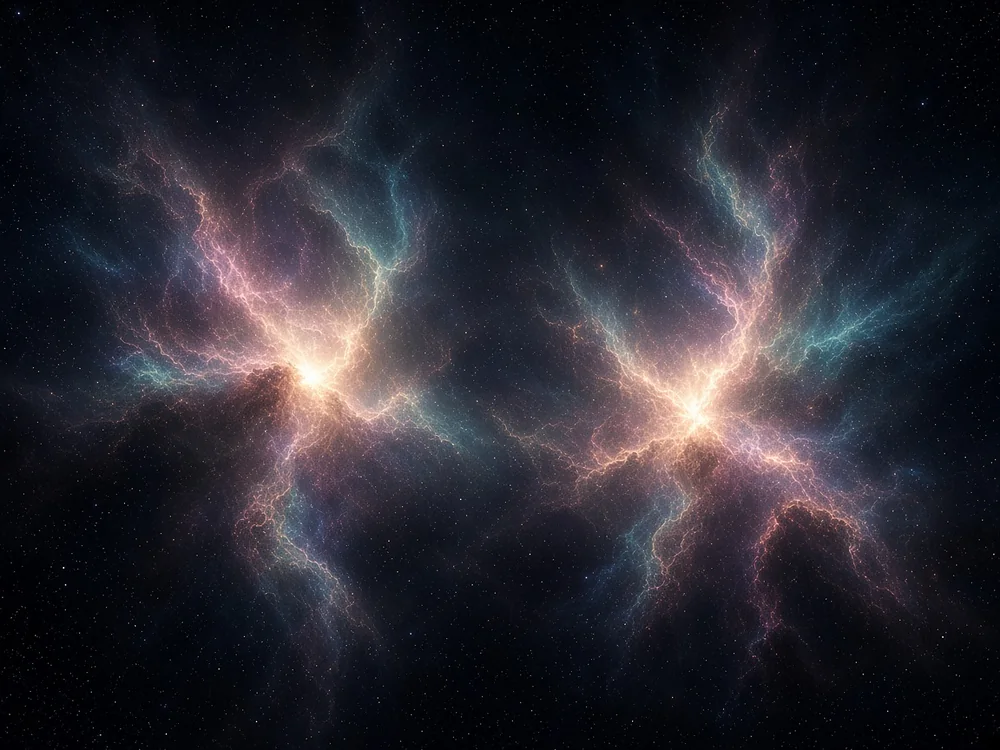
Two sunsets can look alike. They are never the same one.
- The big idea
- Nothing repeats. The Real never shows itself the same way twice.
- What’s hard to get
- Things seem repeated because they resemble each other, like two waves, or two Tuesdays.
- Common misconception
- That routine means nothing new is happening. A routine is a string of first times.
- Why it matters
- Boredom loosens its grip when you see that this face, this light, has never been here before.
Try it now
Take your next sip of water, or your next breath, as though you had never once done it before. Say to yourself, first time. In his view that is not a trick of the mind. It is simply true.
Go deeper
4 short sections. Open any one; each stands on its own.
new worlds since you opened this page: 0
1Not, and then again1 min
The throne of Bilqīs on the main page leads to one of his quietest, most personal lines. After explaining that the throne wasn't carried but un-made in one place and made again in another, he turns to us:
"No, a person does not even feel it in himself: that with every breath he is not, and then he is." (Fus. 155, Sulaymān)
Then he adds a note of grammar: don't let the word "then" make you picture a gap. There is no waiting room between the two (Fus. 155; paraphrase). You are not a statue slowly wearing down. You are a fountain: the same shape, new water, every breath.
2Going and staying1 min
Ibn Arabi takes two old Sufi words, فناء fanāʾ, passing away, and بقاء baqāʾ, remaining, and finds them happening in every instant. The people of unveiling, he writes, see that each self-showing of the Real gives a new creation and takes one away:
"Its going is the very passing away at the showing, and the remaining belongs to what the next showing gives." (Fus. 126, Shuʿayb)
You don't have to wait for some great moment of letting go. Letting go is already happening, breath by breath. So is being given again. Each exhale is a small passing; each inhale is a small remaining.
3Too wide to repeat1 min
Why does nothing ever happen twice? His answer is not about time. It's about size.
"The divine vastness means that nothing ever repeats in existence." (Fut. I.266, ch. 48)
He cites the early master Abū Ṭālib al-Makkī, author of The Food of Hearts: the Real never shows itself in one form to two people, nor in one form twice (Fut. I.266; paraphrase). This is a comfort for anyone stuck in a loop. The Monday that feels exactly like last Monday is not the same Monday. The resemblance is real; the repetition is not.
4Why it looks the same1 min
If everything is new each breath, why does my kitchen look the same? He has a direct answer. The senses are veiled by the form: the shape stays steady, so you don't feel the change.
"Because the senses veil him with the form, whose change he did not feel." (Fut. II.46, ch. 73)
He ties it to the verse "and We make you grow again in what you do not know" (Q 56:61), which he reads as "with the breaths" (Fut. II.46). Think of a film: twenty-four still frames each second, and your eye sees one smooth walk. Steadiness is real. It is just made of newness.
Rūmī put the same idea in a line Persian readers still know by heart: every breath the world is made new, and we don't notice (paraphrase).
Key words
If every moment is new, where does a thing wait before it arrives? In the in-between.
Next · Chapter 7: Barzakh and imagination →‹ Chapter 5: The Breath of the Merciful · Course homeSources
- Ibn ʿArabī, Fuṣūṣ al-ḥikam; trans. R. W. J. Austin, The Bezels of Wisdom (1980) (the chapters of Shuʿayb and Solomon)
- Ibn ʿArabī, al-Futūḥāt al-Makkiyya, ch. 48 and ch. 73
- William C. Chittick, The Sufi Path of Knowledge (1989), ch. 6 “The New Creation”
- Qurʾān 27:40, 50:15 and 55:29
- Ibn ʿArabī, Fuṣūṣ al-ḥikam, ed. Afifi, Shuʿayb (p. 126), Sulaymān (p. 155)
- Ibn ʿArabī, al-Futūḥāt al-Makkiyya, ch. 48 (I.266), ch. 59 (I.292), ch. 73 (II.46)
- The Qur'an 50:15; 55:29; 56:61
- Jalāl al-Dīn Rūmī, Mathnawī, book I
- Toshihiko Izutsu, Sufism and Taoism (1983)