Ibn Arabi · Chapter 5 of 10
The Breath of the Merciful
نَفَسُ الرَّحْمٰنِ
The world, breathed out in mercy, letter by letter.
The one idea
The world, for Ibn Arabi, is breathed out: a long, kind sigh of relief. He calls it نفس الرحمن nafas al-Raḥmān, the Breath of the Merciful.
A breath that leaves the chest takes shape as sounds, the sounds as letters, the letters as words. So the world is like speech, and every thing in it is a word. Mercy is not a reward added later. It is what the world is made of.
Chapter 5 of 10The Breath of the Merciful
Breath into letters
Creation is like a breath of mercy that comes out and takes shape as letters, then words, then things.
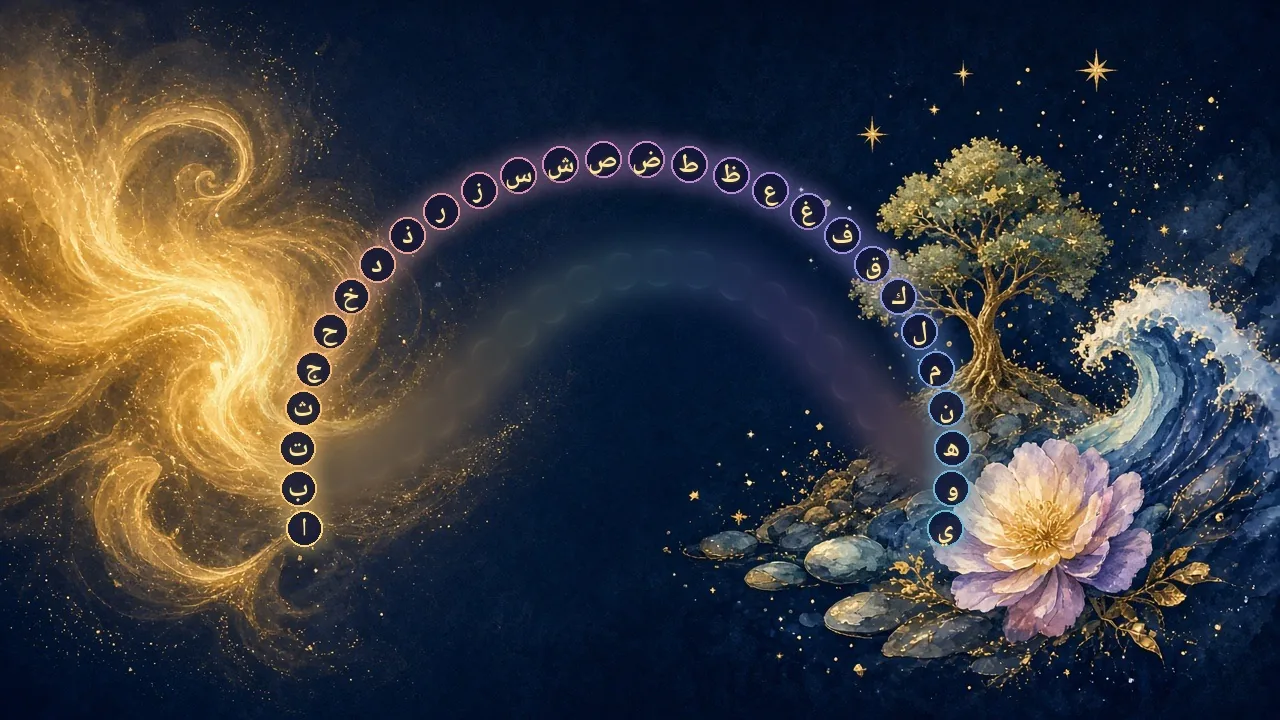
Hold to breathe out.

Why it’s interesting
The world is like divine speech, so everything is a “word”.
The hard part
It’s poetic, but he means it quite literally.

Common misconception
That it’s just a metaphor.

Why it matters
It makes mercy the very stuff the world is made of.
From the Scholar’s notes4 passages · Arabic, with where to find it
Chapter on the Breath (nafas)
الباب الثامن والتسعون ومائة في معرفة النفس بفتح الفاء
Fut. II.390ff (ch. 198)His own words
The Real described itself by the breath, from "relief"
وصف نفسه بالنَّفَس وهو من التنفيس
Fus. 119 (Shuʿayb)His own words
The breath of the Merciful
الحق وصف نفسه بالنفس الرحماني
Fus. 143 (ʿĪsā)His own words
The love-to-be-known is tied to the Breath of the Merciful
Fut. II.310 (ch. 177); II.399His own words
Each line is a short gloss of the passage, not a translation. “His own words” means the Arabic is from Ibn Arabi’s own text at that place.
Points of articulation
Each Arabic letter is made at a different spot from throat to lips, and he matched those spots to levels of the cosmos.
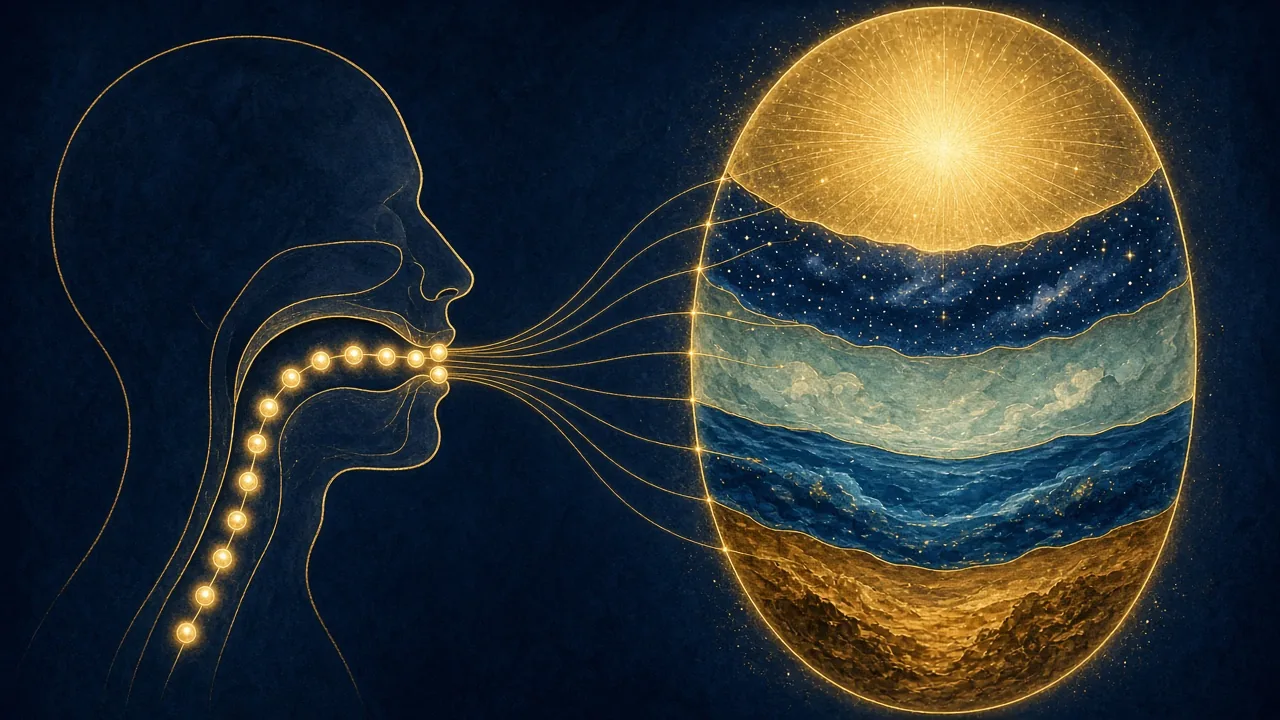
Slide from throat to lips.
Why it’s interesting
Speaking becomes a tiny model of how the universe was made.
The hard part
It’s the most technical part of his teaching.
Common misconception
That it’s magic or fortune telling. For him it’s a map, not a spell.
Why it matters
It shows how deeply he linked language and reality.
From the Scholar’s notes2 passages · Arabic, with where to find it
Ladders of coming-to-be, where the breath rises
معارج التكوين فيها يعرج النفس الرحماني
Fut. II.181 (ch. 98)His own words · not every detail confirmed
All being is words that never run out
العارفون بالله عندهم الوجود كله كلمات الله لا تنفد أبدا
Fut. I.436 (ch. 69); cf. I.366His own words
Each line is a short gloss of the passage, not a translation. “His own words” means the Arabic is from Ibn Arabi’s own text at that place.

The roots of the words
Arabic builds words from three-letter roots. Tap a root to turn it.
And the breath never stops: the world is made new every moment.
Next · Chapter 6: New creation at every instant →‹ Chapter 4: Fixed essences · Course homeSources
- Ibn ʿArabī, Fuṣūṣ al-ḥikam, ed. ʿAfīfī, p. 119 (Shuʿayb), p. 143 (ʿĪsā)
- Ibn ʿArabī, al-Futūḥāt al-Makkiyya, I.436 (ch. 69), II.181 (ch. 98), II.310 (ch. 177), II.390
- Chittick, The Sufi Path of Knowledge (1989), ch. 8 "The Supreme Barzakh": "The Breath of the All-Merciful", "Relief Through Mercy". Titles from the SUNY table of contents, page unverified
- Chittick, Imaginal Worlds (1994), on mercy and the Fire
- Mohammed Rustom, The Triumph of Mercy (SUNY 2012)
- Chittick, The Sufi Path of Knowledge (1989), **p. 391 n. 14**: translates Fut. II.399. **Verified** via Murad, "Vicegerency and Nature" n. 3, and Chittick, "Divine Love in Early Persian Prose" n. 15 (which gives II.399, line 28)
- Chittick, The Sufi Path of Knowledge (1989), **p. 66**: the popular version. **Verified** via Murad n. 3
- Chittick, Divine Love (Yale 2013), **pp. 18–19**: Maybudī cites it without calling it hadith. **Verified** via Chittick, "Divine Love in Early Persian Prose" n. 5
- Claude Addas, "Love in Ibn ʿArabi's Writings" (ibnarabisociety.org): opened, no page numbers
- Henry Corbin, Creative Imagination in the Sufism of Ibn ʿArabi (1969)